RAB-ELEMENTS / SELECTED WORK
Selected work.
02 / SELECTED WORK
Engineering
in practice.
Real machinery. Specific challenges.
A closer look at production, assembly and testing.
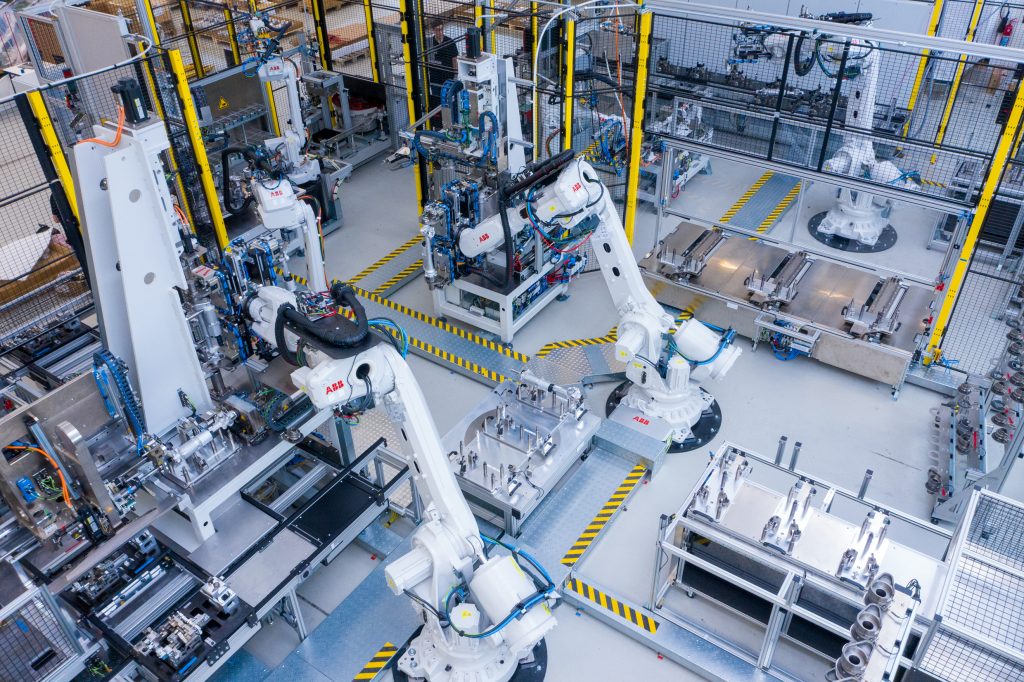 ↗
Connected production.
Automated and manual manufacturing systems.
Part handling, process stations and inspection coordinated around the production task.
A production line brings separate operations into a coordinated sequence. Manual workplaces, automated stations and robotic handling each have a defined role, from introducing a component to assembly and inspection. The mechanical concept must connect these steps so that workpieces move through the system in a controlled, repeatable way.
Our design work considers station layout, fixtures, transfer mechanisms and the interfaces between units. Operator access, changeover and maintenance are part of the same engineering task. The result is a mechanical foundation developed around the component, the required process and the space available for production.
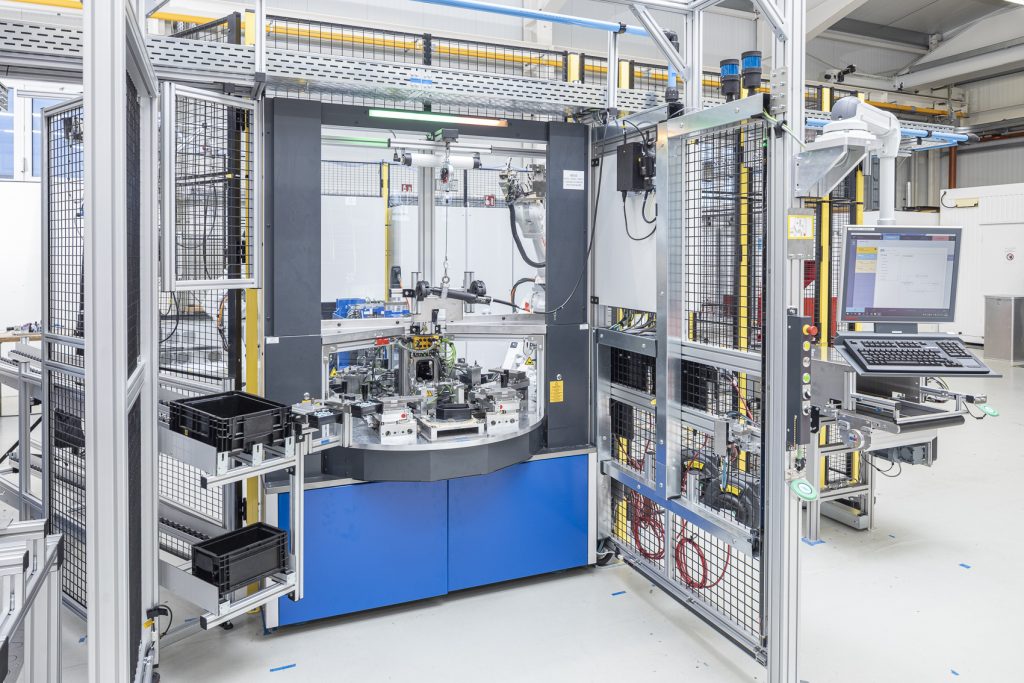 ↗
Stand-alone process modules.
Individual process units and modular stations.
Tooling, workpiece positioning and mechanical interfaces brought together around a defined operation.
A process module concentrates on a defined manufacturing step, such as positioning, joining or checking a component. Its tooling, support structure and handling arrangement are developed as one unit. Depending on the production concept, that unit can serve a separate workplace or become a station within a larger line.
Clear interfaces make modular systems easier to integrate and adapt. We consider workpiece geometry, process forces, access to tooling and the connection to neighbouring equipment. This gives the module a practical place in the production flow while leaving room for component variants, servicing and future changes to the system.
↗
Assembled. Tested. Verified.
Final assembly of servo-electric steering drives.
Mechanical assembly, electrical connections and final checks, with cleanliness and electrostatic protection in mind.
Final assembly brings mechanical and electrical components together through a carefully arranged sequence of joining, fastening and contact operations. In a servo-electric steering drive, accurate positioning and controlled handling are essential. Inspection and functional testing need to fit into that sequence, with appropriate access to the assembled product.
Mechanical design supports the process through component fixtures, guided movements and interfaces for assembly and test equipment. Cleanliness, electrostatic protection and service access influence the layout from the beginning. Each station is considered in relation to the next, so assembly operations and final checks form a coherent production concept.
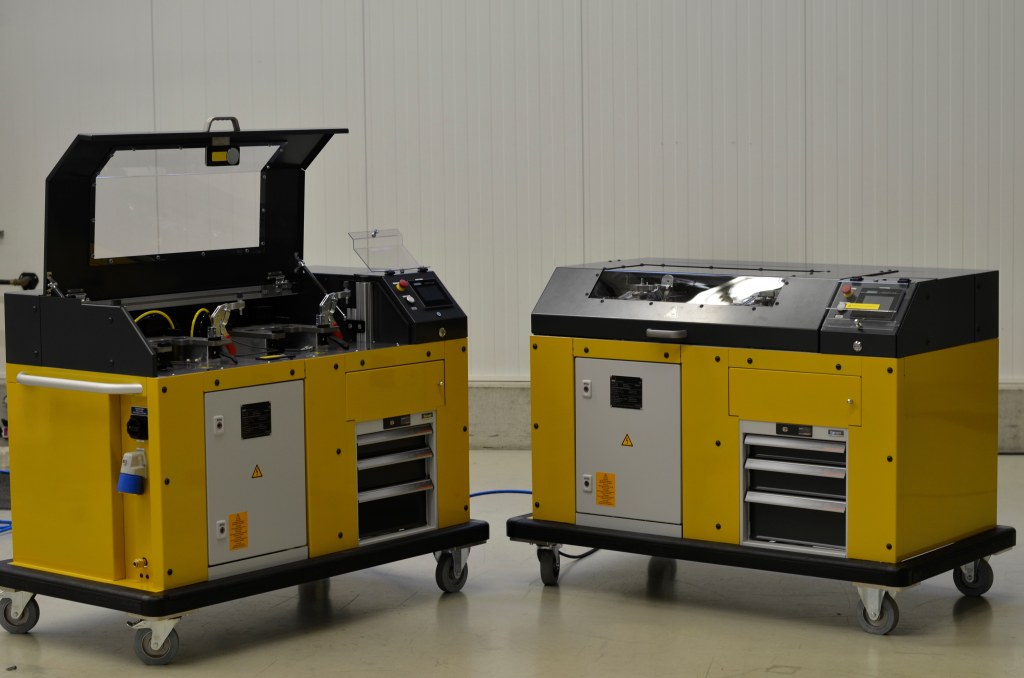 ↗
One task. A tailored solution.
Dedicated machines for specific production needs.
Compact workstations and purpose-built tooling, shaped by the component and its process.
A dedicated machine is developed around a specific component and operation. Whether the task involves assembly, pressing, positioning or inspection, the design starts with what the workpiece needs. The degree of automation follows the production requirements, from an operator-assisted station to a machine with automated handling.
The frame, fixtures and working mechanisms are considered together with loading, guarding and access for maintenance. Attention to these details helps the machine fit into everyday production. Our engineering contribution turns the process requirements into a clear mechanical concept and detailed documentation for the equipment to be built.
